How Parking Analytics Help You Adjust Strategy for Seasonal Fluctuations
Every year, the same story plays out across parking operations. Seasonal change rarely appears first in a report or dashboard. It shows up in complaints, citations, and phone calls.
On campus, fall start is often the flashpoint. New drivers arrive all at once, unsure where to park, unclear on rules, and under pressure to get to class. A parking operation that works well most of the year can feel overwhelmed overnight. Parking demand rises quickly, parking utilization spikes in core areas, and frustration grows as available spaces disappear.
A few months later, the picture looks very different. Demand settles as some students decide not to keep a car, others learn where they prefer to park, and parking patterns stabilize. Then exam periods arrive, bringing a different kind of pressure. Drivers are more willing to risk parking violations to arrive on time. Around holidays, parking occupancy drops sharply, leaving large parts of the parking operation underused.
Municipal and resort operations follow similar cycles with a different rhythm. Cities often see weekday demand tied to work hours and weekend spikes around shopping or entertainment. Resort communities experience long peak seasons followed by sudden slowdowns. Visitor drivers, unfamiliar with rules, parking guidance, or the layout of a parking facility, add another layer of strain.
None of this is random. The same weeks tend to be busy year after year, and the same behaviors repeat. The issue is not unpredictability. It is that these seasonal signals are usually spread across disconnected systems or stored in people’s heads. Parking analytics bring that information together so seasonal planning feels intentional instead of reactive.
Seeing Seasonal Parking Demand as a Pattern That Repeats
When we look at a campus or city through parking data analytics, a clear seasonal rhythm appears beneath the daily noise of parking management.
On a typical campus, fall start shows up as a sharp peak. Core parking lots and parking garages reach high utilization, drivers circle looking for a parking spot, and violations rise as new parkers learn the rules. Over time, those curves flatten. Some students stop bringing cars, others adjust their routines, and demand spreads more evenly across each parking area.
Exam periods bring a different pattern. Parking occupancy increases near academic buildings, parking duration changes, and time-limited zones see more violations. After exams, demand drops quickly, especially during longer breaks.
Municipal and resort environments follow the same logic with different shapes. Office districts fill during business hours and clear in the evening. Entertainment districts peak on predictable nights. Resorts often resemble an extended fall start, with sustained parking demand followed by sharp declines when the season ends.
What matters is consistency. Last year’s fall start, exam period, or peak season is a strong signal for what will happen next. Parking analytics and data analytics make those patterns visible so planning is based on evidence rather than memory.
What Parking Analytics Look Like in Day-to-Day Operations
Parking analytics are not static dashboards that sit unused. They shape how parking managers and parking operators understand their parking operation day to day.
Most parking operations already collect large amounts of data. Payment systems record when and where drivers pay. Permit platforms track who is authorized to park. Cameras, video analytics, and license plate recognition show where vehicles are and how long they stay. Guidance tools reflect parking space availability in real time.
The challenge is fragmentation. Each system tells part of the story. Very few teams have time to move between platforms, export reports, and connect the dots manually.
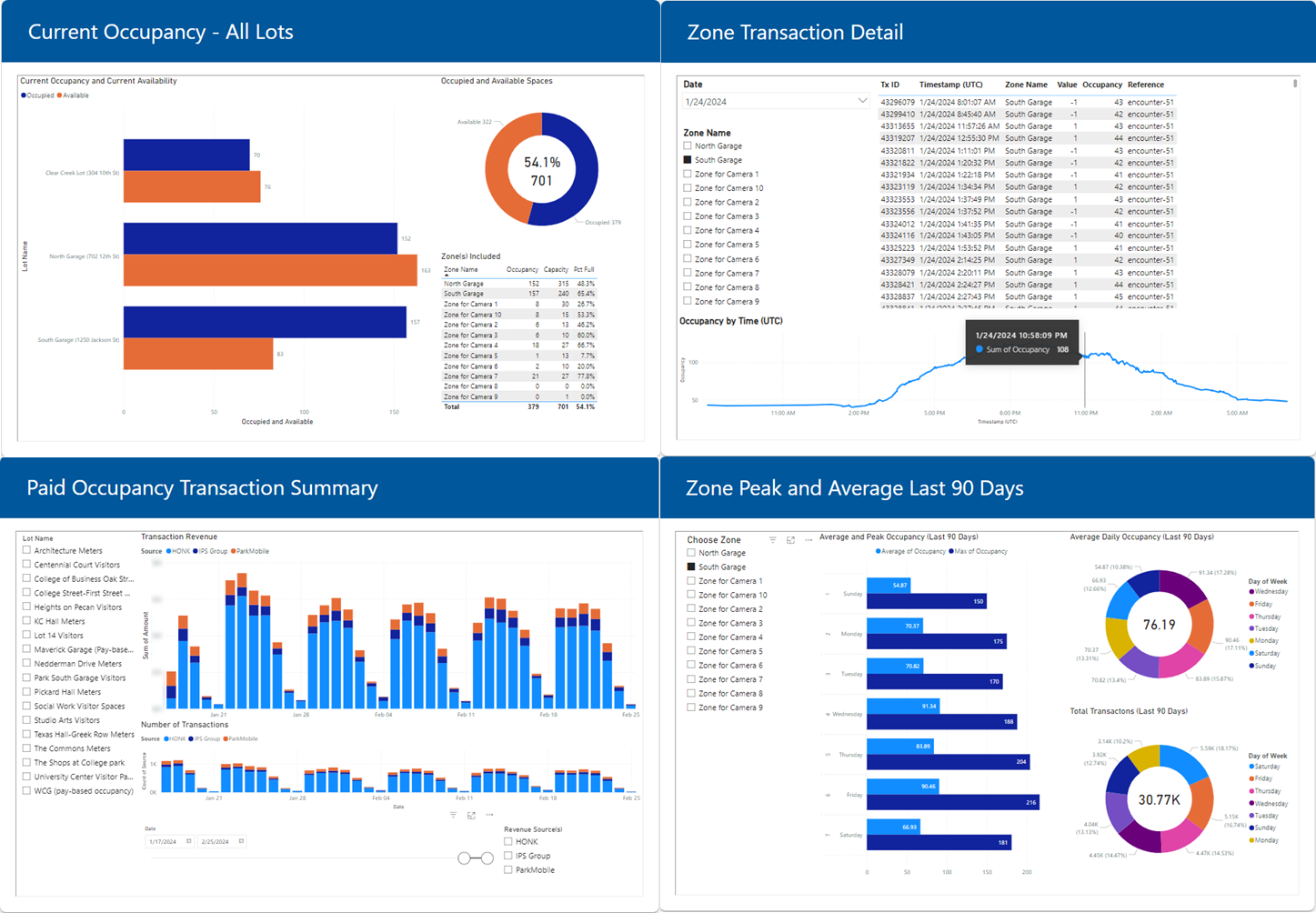
Mistall focuses on bringing those sources together into a single analytics view. That unified picture allows teams to answer practical questions without guesswork. Where do we consistently reach capacity during peak season? Which parking spaces stay underused? When do parking violations increase, and what does that mean for operational efficiency and revenue?
When parking data lives in one place, parking management stops feeling fragmented. It becomes a system you can understand and guide. It also protects institutional knowledge. Long-tenured managers carry years of insight, but if that insight is not stored in data, it disappears. Parking data analytics make that knowledge visible and repeatable year over year.
Using Historical Data to Shape Seasonal Strategy
Seasonal planning often starts with a simple question: what did last year look like?
With the right analytics in place, teams can review specific periods and understand how their parking management system behaved. In the first weeks of term, which parking facilities consistently reached high utilization? During exams, how did parking occupancy and parking duration change near key buildings? In downtown districts, which weekends or events drove the largest spikes in traffic flow and parking demand?
When those periods are compared year over year, patterns emerge. Some weeks reliably function as high season, while others are consistently quieter. Outliers also stand out, and that is where context matters. Construction projects, new buildings, traffic surveys, or changes in programming can all influence results.
The strongest seasonal strategies combine analytics with experience. Data provides an objective baseline. Local insight explains why certain weeks look different. Over time, this review becomes less of a report and more of a playbook. As datasets grow, predictive analytics can help anticipate likely surges or slowdowns and support better planning for staffing, enforcement, and parking revenue.
Using Parking Analytics To Set Permit Limits And Pricing With Confidence
For campus operations, some of the highest‑stakes decisions happen before fall start: how many permits to sell, and what to charge.
Most parking teams sell a block of permits in advance, then watch nervously to see if they can release more without overselling. If they get it wrong, lots overflow, drivers complain, and citations spike for reasons nobody is happy about.
Real‑time occupancy and clear parking allocation data change that. When parking leaders can see how permit holders actually use each facility during those first critical weeks, they can judge whether specific lots or zones still have room. That allows additional permits to be released in a controlled way, without denying parkers the ability to find a space.
Over multiple years, the same parking data analytics help fine‑tune pricing. Operations can compare how different permit volumes and rates affected demand in each location, and see which garages can tolerate higher counts or higher prices and which are already at their limit.
Instead of relying on gut feel, campus parking organizations walk into each new fall with evidence: how many permits can be safely sold, where prices can be adjusted, and what impact those changes are likely to have on demand across campus.
Aligning Staffing and Enforcement With Real Demand
Staffing and enforcement decisions affect people, budgets, and public perception. Without clear analytics, it is natural to rely on habit: the same routes, the same schedules, and the same assumptions about problem areas.
The challenge is that cities and campuses do not stand still. New construction, evolving travel behavior, and shifting traffic patterns all influence congestion and space utilization over time.
Parking analytics reveal where effort actually matters. Patterns in parking occupancy, turnover, and violations show which areas require regular presence and which remain stable with minimal oversight. This allows teams to focus resources where they support fairness, availability, and the overall parking experience.
Mobile license plate recognition illustrates this shift well. While often deployed for enforcement, the same data supports counting vehicles and understanding turnover. Many teams now value this information as highly as citation data because it shows how each parking space contributes to system performance.
Responding When the Pattern Breaks
Even the best seasonal plan will face days that do not match expectations. Weather events, road closures, special events, truck parking activity, or unexpected demand can quickly disrupt normal parking patterns.
Real-time analytics help teams respond when this happens. Live parking occupancy, dwell time, and activity data highlight unusual behavior as it develops. If a parking lot that rarely fills suddenly begins to do so, that change signals a shift in nearby conditions.
Seeing these signals early supports faster response. Dashboards flag unusual activity. Parking guidance systems can direct drivers toward available spaces. In smart parking deployments, this responsiveness helps reduce circling, congestion, and traffic congestion.
Seasonal analytics provide the long view. Real-time analytics provide the short view. Together, they support both day-to-day operations and long-term planning.
Turning Seasonal Guesswork Into a Clear Process
Seasonal swings will always be part of parking. What changes with analytics is how prepared teams feel when those swings arrive.
When parking data, analytics, and business intelligence live in one place, patterns become clear across months and years. Teams gain actionable insights into where they are over-serving, under-serving, and where small adjustments could improve results.
That clarity supports better conversations with leadership, more defensible staffing plans, and clearer communication with drivers. Instead of reacting to each season as if it were new, parking managers can move forward with a plan grounded in data.
If you want to see how this works in your environment, a parking analytics walkthrough is a practical place to start. Bring one semester or season of data, whatever you have today. Together, that information can support a seasonal strategy for staffing, enforcement, parking guidance, and parking revenue that improves operational efficiency and the overall parking experience.