Turning Parking Occupancy Data Into a Budget Case
Why Your Budget Case Is Only as Strong as Your Data
You know your parking operation. You've watched it long enough to see the patterns nobody else sees: which lots fill first, which times bring the real pressure, and where chaos peaks. You're right about what's happening. The problem is that being right doesn't fund anything.
Leadership doesn't fund feelings or hunches. You can walk into that meeting certain about your operation, having lived it every day, and still walk out with nothing. You've probably already felt the frustration of knowing exactly what needs to happen and having to convince someone who doesn't spend their day managing parking that you're not just guessing.
A gut read and a graph are two very different things in a budget conversation. Your instincts are usually right. But instincts don't survive scrutiny when leadership has been trained to say no to them. What you need is parking occupancy data that turns what you already know into something you can put on a slide, impossible for leadership to ignore.
From Parker Complaints to Evidence Leadership Trusts
Every director hears the same complaints. "There's no parking anywhere." "G lot is always full." "I circle for twenty minutes every morning." These are real frustrations, but anecdotal evidence doesn't survive a budget meeting.
Occupancy data gives you a true measure of what's actually happening across your parking facility, and more often than not, it tells a more compelling story than the complaint does.
Parkers call in, swearing a lot is full every single time they show up. The data shows something different. The lot isn't full. The desirable spaces are full, the ones nearest the building, while open spots sit on the far side where nobody wants to walk. Sometimes that same data shows parkers eating up search time in a lot they shouldn't be in, adding to congestion, when they could be directed somewhere with open space. The parker isn't imagining things. They just can't see the whole lot while they're driving and hunting for a space at the same time. All they see is the full section, so they assume every parking space is gone.
Now you're not fighting a vague complaint. You're showing leadership a measurable pattern of strong demand for premium spaces, real availability elsewhere, and a gap you can actually address.
The Metrics That Belong in Your Business Case
Not every number carries weight in a funding conversation. A few do, and they matter because they translate parking into terms a non-parking audience understands.
Utilization
Start here. If you don't understand the real utilization of your parking assets, no technology will fix the underlying problem, and you may be solving for the wrong thing entirely. Utilization is really just parking demand expressed as a number. Once you can show it clearly, you can talk about whether demand and supply actually match. Sometimes the honest answer is that you don't need more parking spaces or more technology at all, and saying so out loud is what actually earns leadership's trust.
Real-Time Occupancy
Real-time parking occupancy answers the question your audience asks most: where is available parking right now? It's what you share with students, staff, and visitors who need a space today. It also feeds the customer-satisfaction side of your case, which we'll come back to.
Historical Occupancy
Historical occupancy is your predictor. When you can show that a lot runs full every Thursday afternoon, you're no longer guessing about next Thursday. You're reporting a pattern. That shift, from "I think" to "here's what happens every week," is what gives leadership something solid to fund.
Transaction Volume
Counts of vehicles moving in and out of a facility tell you more than headcount. If a parking garage fills fast every morning and empties every evening, transaction data can surface a traffic or pedestrian safety concern worth raising. Safety arguments land differently in a budget room than convenience arguments do.
Using Historical Data to Justify the Long-Term Ask
A single snapshot proves a moment, but a trend line proves a trajectory, and a leadership funds trajectory.
Historical parking data matters for long-term planning because it shows your operation's evolution. Every year, students return and hit the same issues. Every year, you roll out new policies to respond. With several years of parking lot occupancy data behind you, not just one or two, you can actually see whether those policies worked. When the numbers show your efforts paid off, you can invest in a strategy with confidence, because you've watched it succeed before.
This also protects you against change. Campuses never stay the same; the number of spaces, the size of the incoming class, and the layout itself are constantly changing. One year, you have a parking lot, the next year that lot is a building. Those parkers don't disappear. They get displaced. Historical occupancy shows you where the availability exists to absorb them, so a construction decision doesn't become a parking crisis.
What It's Actually Costing You to Operate Without This
This isn't only about spending on something new. It's about the inefficiency that's already costing you every day.
When demand and supply aren't in balance, and you have no clear way to see the gap, the costs pile up quietly. Parkers can't find spaces fast enough. Search time climbs. Frustration builds. That stress is a real operational cost, even when it never shows up on an invoice.
Enforcement is a clear example. Many operations send their team on the same beat every day. Nine o'clock this lot, ten o'clock the next, same route, same times. The people parking illegally learn the pattern, and they know exactly when they can get away with it. When you let occupancy data guide enforcement toward where offenders actually are, that predictability disappears. You gain real parking efficiency, not just more citations. Compliance goes up, and compliance means higher revenue and better use of the staff you already pay for.
You Don't Need a New System to Build This Case
Building a real data case does not require a big new investment first, even though that's a common objection.
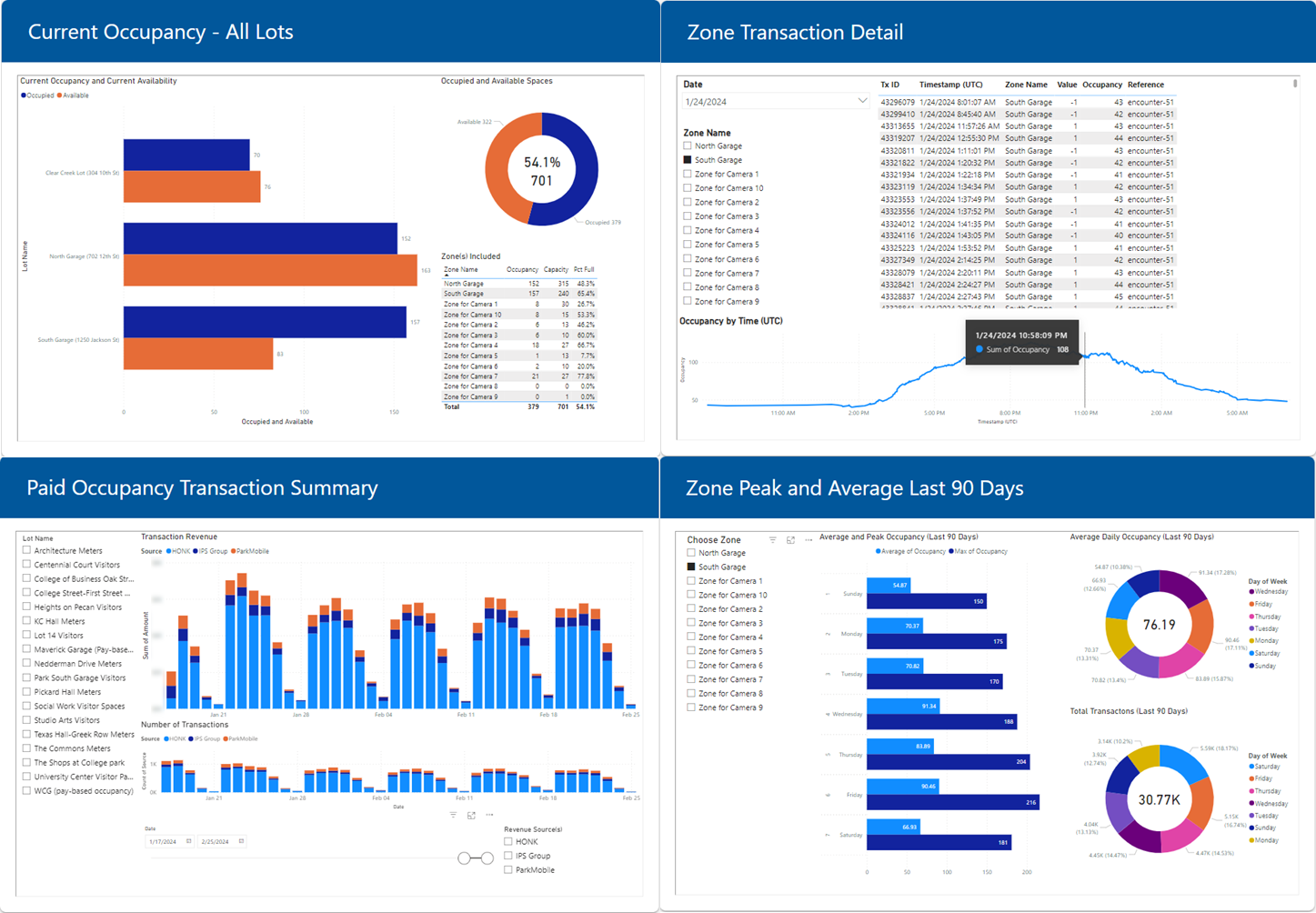
Most parking operations are richer in data than they think. You very likely already have information you can use such as manual counts, LPR, payments, PARCS, networked cameras, or other count systems. That infrastructure can measure utilization right now, showing you where the available parking spaces actually are, with no new hardware purchase. Even license plate recognition that you already use for other purposes can feed the picture.
A parking operation almost always has a collection of systems that grew over the years to meet different needs. Permits here, citations there, visitor payments, event tools. Each was purpose-built and does its job well. There's no single perfect parking management system, and wholesale replacement usually isn't the answer. The real opportunity is bringing those separate data sets together so they finally make sense as one picture.
That's the work we do at Mistall. We take the data from the systems you already own, whatever the source, and turn it into occupancy you can report on. It's a cost-effective way to get one reportable view without buying another expensive tool.
If you have a funding conversation coming up, let's talk about pulling your existing systems into a single view you can bring into the room. Reach out to Mistall, and we'll help you build the case with what you already have.
You're Richer in Data Than You Think
Advancing a campus parking operation doesn't require replacing what's already in place. It requires bringing together what already exists.
Every parking solution a campus has invested in over the years is generating data. The cameras, the sensors, the pay stations, the permit platform are all contributing to a picture that no one has ever looked at as a whole. Aggregate that data. Pull it into a single view. Look at it from different angles.
That's the shift we help parking operations make. A layer of integration that turns disconnected data streams into a single source of operational truth. The data is already there. It just needs somewhere to come together.